Videos | Post Video | Building Features | Structural Integrity | Comparisons | Building Design | Trusses


Post-frame construction is widely recognized for its design flexibility, energy efficiency, and long-term durability. Some pole barn owners incorporate solid timber elements to enhance structural integrity and architectural character.
Exposed wooden trusses and wrapped columns have become popular upgrades in barndominiums, commercial businesses, farm shops, and hobby barns. These heavy-timber features support the metal roofing system while elevating curb appeal.
Douglas Fir (DF-L) and Cedar are two common timber species for these applications. They’re chosen for their strength, stability, and natural grain patterns. This article compares key characteristics to help you choose the best timber for your pole barn project.
What is the Difference Between Douglas Fir and Cedar Timber in Post-Frame Construction?
The primary difference between Douglas Fir and Cedar timber in post-frame construction comes down to structural strength and purpose.
Douglas Fir is known for its structural strength and long-term durability, making it a preferred choice for timber-frame trusses and other load-bearing components.
Cedar is valued for its natural beauty and is commonly used for decorative accents where appearance is the primary focus.
Douglas Fir vs. Cedar Timber in Post-Frame Construction
Douglas Fir Timber
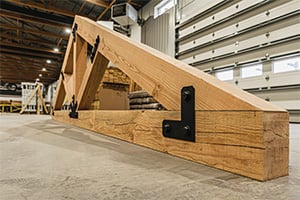 Douglas Fir is one of the most durable softwoods when exposed to the elements. This timber species is a native of the Pacific Northwest. DF-L is resistant to moisture damage, which causes premature aging in wooden post-frame building components.
Furthermore, Douglas Fir is well-known for its structural properties. It has the highest ratings among Western softwoods for bending, tension, and compression. DF-L also provides a high strength-to-weight ratio. When properly dried, it stays dimensionally stable with little warping or checking.
Visually, Douglas Fir grades well with a light rosy hue and consistent grain pattern.
Ideal Uses: Timber-frame trusses, exposed beams, porch wraps, and structural columns that need load-bearing support.
Watch this short YouTube video to learn more about the benefits of using Douglas Fir timber in post-frame construction.
Cedar Timber
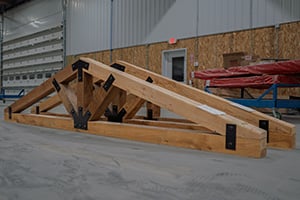 In contrast, Cedar is a popular choice for decorative accents and non-structural applications. This timber species is naturally resistant to decay and insects. It also remains dimensionally stable and less likely to shrink, swell, or warp over time.
Moreover, Cedar has lower strength ratings and is more prone to surface damage. For this reason, post-frame builders use Cedar as an architectural accent rather than a load-bearing component.
Cedar is also valued for its distinctive aroma and natural sound-absorbing capabilities. This unique characteristic makes it a good choice for some pole barn interior finishes.
Ideal Uses: Decorative trim, column wraps, porch details, and non-load-bearing applications where appearance matters most.
Why Pole Barn Builders Recommend Douglas Fir for Timber-Frame Applications
When structural integrity is involved, Douglas Fir outperforms Cedar. Its superior strength ratings, durability in outdoor environments, and refined appearance make it a smart choice for timber-frame use.
Bottom Line: Select DF-L for strength, performance, and longevity. Pick Cedar for decorative accents, not for structural support.

How to Care for Exterior Douglas Fir and Cedar Timbers
Douglas Fir and Cedar can perform well outdoors with the proper care. All exposed wood must be properly finished and regularly maintained to protect against weathering, moisture, and UV damage. Without routine care, even these durable timbers may lose their strength and visual appeal over time.
Choosing the Right Finish
The pole barn owner will complete the staining. Select a finish based on your desired look and the level of ongoing maintenance you’re willing to perform. Be sure to follow the manufacturer’s directions to achieve the best protection.
| TYPE OF FINISH | DESCRIPTION |
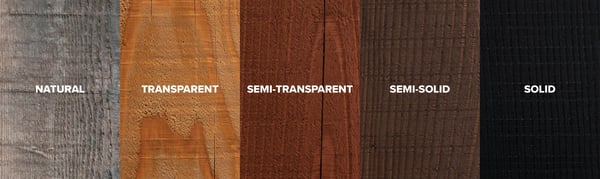
| Natural – No Stains or Sealers | Weathers to a gray color. Absorbs more moisture. Develops additional timber checking when exposed to sunlight and the elements. |
| Transparent or Clear Sealers | Preserves the natural look while offering minimal UV protection. Re-apply every 1-2 years. |
| Semi-Transparent Stains | Enhances the wood grain while adding UV protection. The typical maintenance cycle is 2-4 years. |
| Semi-Solid Stains | Provides more pigment for better UV protection and moisture resistance. The wood grain remains partially visible. Re-coating takes place every 3-6 years. |
| Solid-Color Stains | Offers the highest level of protection and the longest service life (5+ years). Largely conceals the natural wood grain. |
Bottom Line: Use transparent or semi-transparent stains to highlight the natural wood grain. Apply semi-solid or solid stains for longer protection with minimal upkeep.
Cleaning and Routine Care
Clean exterior Douglas Fir and Cedar timbers once or twice per year with a mild wood cleaner and low-pressure rinse. Avoid high-pressure washing, which can damage the surface. Always allow the wood to dry completely before applying a maintenance coat.
Recommended Finishes for Post-Frame Buildings in the Midwest
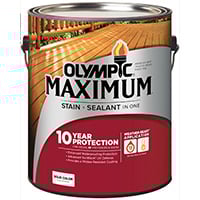 For exterior timbers on Midwestern pole barns, a high-quality stain provides the best results.
Most post-frame builders recommend a semi-transparent or semi-solid option for the best balance of:
- Natural appearance
- UV and moisture protection
- Reasonable maintenance intervals
If maximum longevity and minimal upkeep are your top priorities, solid-color stains provide the most durable protection.
Timber-Frame Truss Styles for Pole Barns: Good, Better, and Best
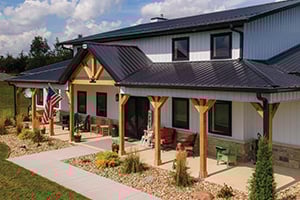 Exposed timber-frame trusses are among the most popular upgrades in modern post-frame construction. They easily add architectural character to porches, entryways, and interior spaces.
At FBi Buildings, we offer multiple timber-frame truss styles to match your budget and vision. Our timber-frame trusses are manufactured from high-quality Douglas Fir. They’re engineered for strength, long-term durability, and reliable outdoor performance.
Each timber-frame truss is custom-designed and built to complement your pole barn’s style and scale, ensuring a finished look that is both structurally sound and visually striking.
Good: Straight Chords with Straight Webbing ($$$)
First, this traditional design features straight top and bottom chords with straight web members. It provides a strong timber-frame truss while keeping the appearance simple and cost-effective. Ideal for customers who want the look of exposed timber trusses without added ornamentation.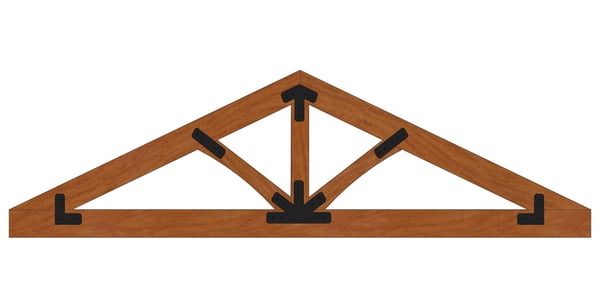
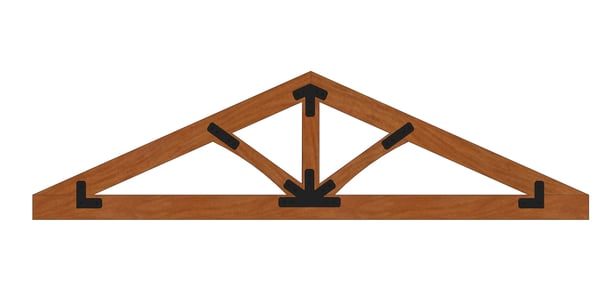
Better: Straight Chords with Radius Webbing ($$$$)
Next, this upgraded design retains the straight top and bottom chords while introducing curved web members. The radius webbing adds visual appeal and craftsmanship while maintaining structural integrity. A popular choice for post-frame building owners who want a more custom appearance without the significant price increase.
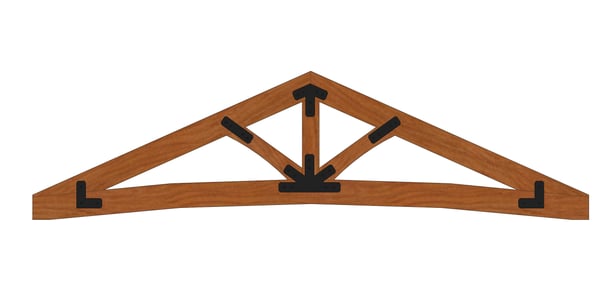
Best: Radius Chords with Radius Webbing ($$$$$)
Lastly, this premium design features curved chords and curved web members for a true heavy-timber look. The radius style creates a bold focal point and delivers the highest level of architectural detail. These timber-frame trusses maximize both structural performance and visual impact.

Concrete Considerations for Timber-Frame Trusses
The concrete slope and thickness must be planned when installing timber-frame trusses and support columns.
These factors, along with the defined pole barn height, determine how the foundation is set and how columns are properly installed.
Your Project Manager (PM) will guide this process to ensure everything is coordinated correctly before post-frame construction begins.
Which Timber Species Will You Choose for Your Post-Frame Building?
Both Douglas Fir and Cedar offer advantages in post-frame construction, but they serve different roles.
DF-L is the preferred choice for timber-frame trusses due to its structural strength and durability. Cedar is mainly used for decorative accents where appearance is key.
Understanding the difference between these two timber species helps owners make informed decisions when designing a pole barn. Selecting the right building material can enhance the longevity and visual appeal of your post-frame building.

Do you have more questions that aren’t covered in this article? If you need help designing or planning, please contact FBi Buildings at 800.552.2981 or click here to email us. If you’re ready to get a price, click here to request a quote, and a Customer Engagement Team member will help you determine the next steps.